
Adapting Organizing Practices: How LCN Hub Leaders Build Power in Their Communities – Hubs Showcase Write-up
Cynthia Jaramillo, Gorana Jovanović, Masha Burina


-
Type
Articles
-
Region
Europe, Latin America
-
Practice
Public narrative, Team structure
-
Language
English
How Are LCN Member-Leaders Adapting Organizing to Their Communities?
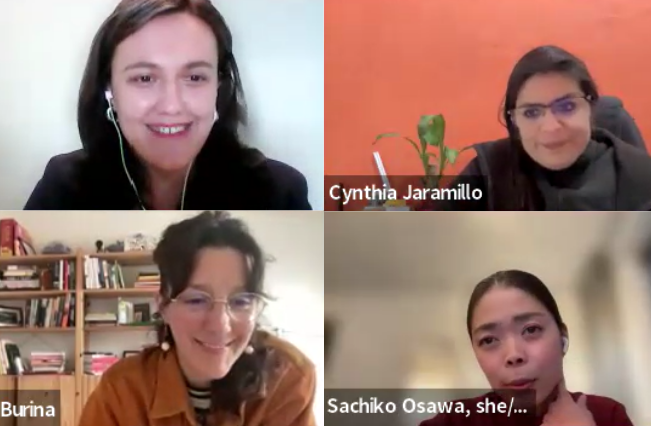
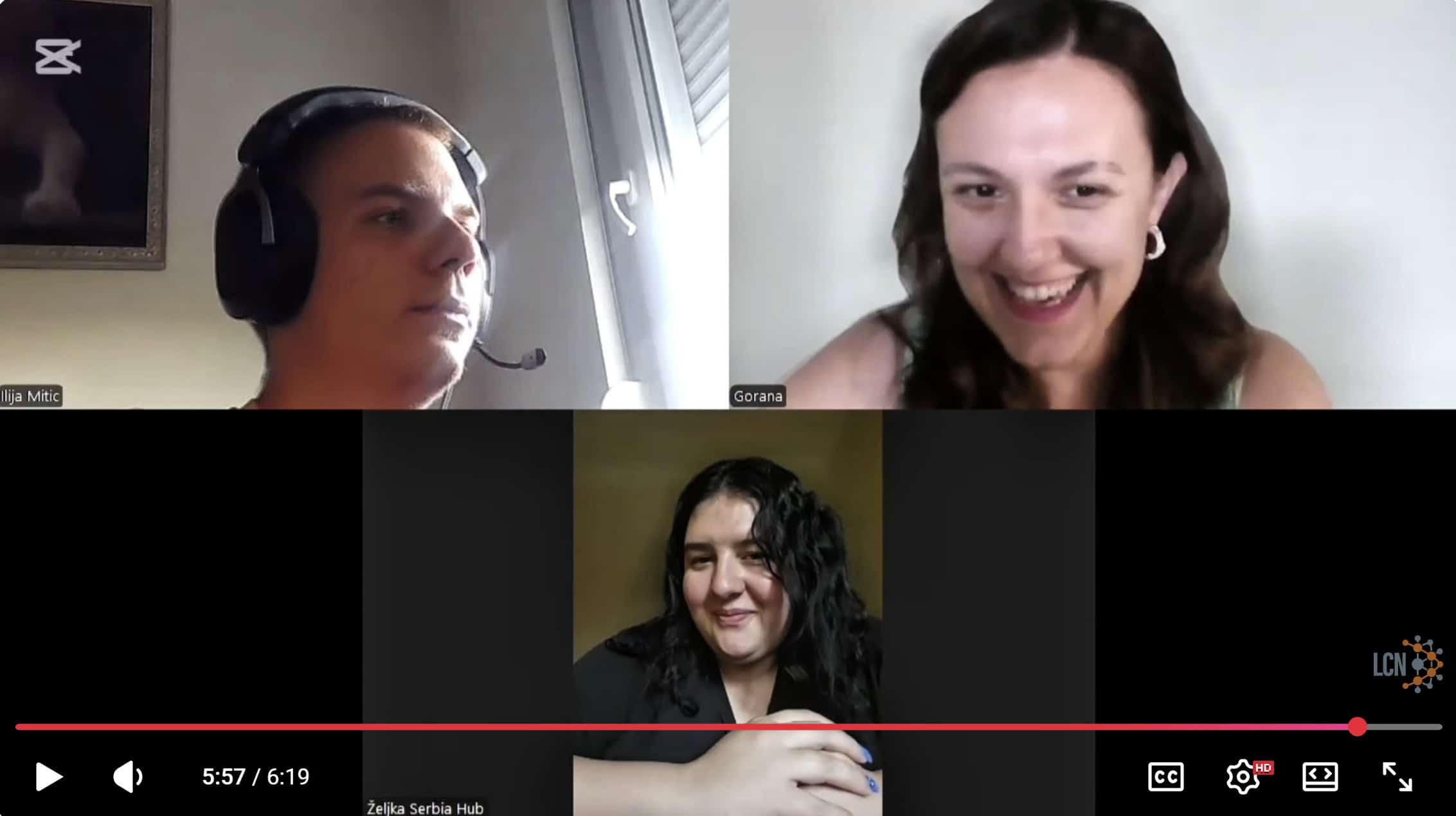
At the Hubs Showcase, Cynthia Jaramillo (Latin America) and Gorana Jovanović (Serbia) demonstrated how they are adapting organizing principles to meet the realities of their communities. By tailoring learning experiences to local challenges, they are equipping people with the tools to build power where it matters most. Participants were invited to reflect on how they might do the same using this worksheet.
Public Narrative & Sisterhood in Latin America
In Latin America, the weight of patriarchy, high rates of harassment, and widespread violence create deep-seated fear among women. Cynthia Jaramillo and her team saw public narrative as a transformative tool—one that could empower women by helping them recognize their emotional resilience and strength.
To create a space where women could safely share their struggles and triumphs, the team modified teaching agendas to foster deep bonds of sisterhood. They expanded writing and sharing time, incorporated heart-centering exercises, and designed more intuitive worksheets like these. These adaptations made public narrative not just a storytelling exercise, but a practice of collective healing and empowerment.
We dedicated the first session only to getting to know each other. We use this activity [in which] we asked every woman to bring a flower or a picture of one, and describe to the rest of the group why this flower represents her, her values or strengths. And it was a very, very powerful moment where women started connecting through their values and started making this space of trust and sisterhood, because they identified that we have the same values and struggles and dreams sometimes. That brings us all together.
– Cynthia Jaramillo
Building Teams in Real Time in Serbia
Meanwhile in Serbia, the informal education system fails to create conditions for people to recognize themselves as active agents and leaders in their own lives and communities. Although students have been at the forefront of today’s movement demanding accountability for corruption—including corruption that has cost lives—there are few spaces where they can develop leadership and community organizing skills.
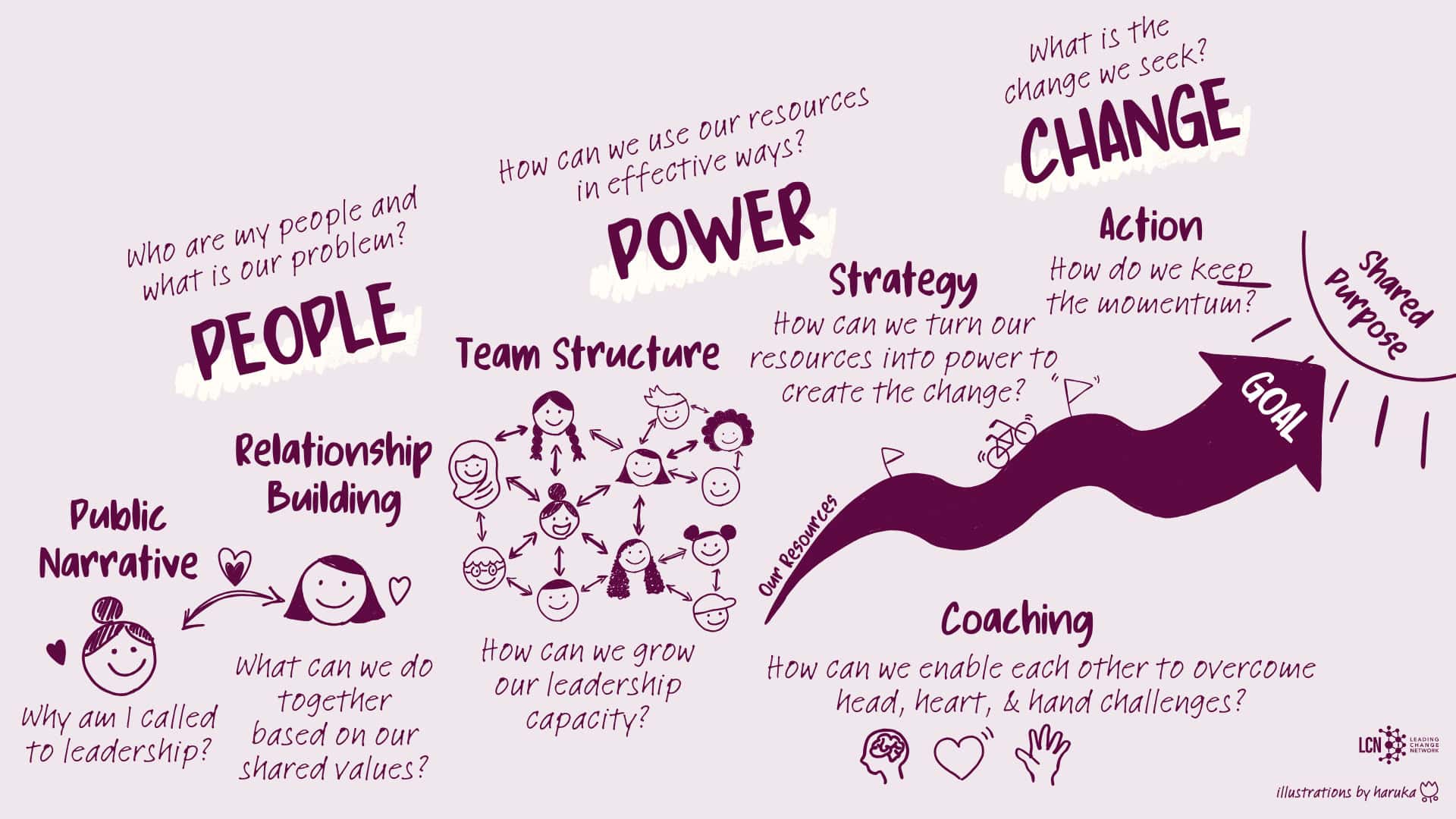
Building from the Action Learning Circles (ALCs) concept, Gorana Jovanović led team-building exercises that emphasized relationship-building and team structuring. Participants engaged in:
- Fishbowl one-on-ones, learning while uncovering shared values and interests
- Norm-setting and norm-breaking, exploring how teams establish and uphold agreements
- Defining shared purpose, aligning their work with their collective vision
By practicing these skills in real time, participants weren’t just learning theory—they were building the foundation of strong teams.

Something that was very important for me is to give the people the chance to learn because learning happens through doing. We practiced one-to-one conversation to form a connected and stable team, [building it] through shared norms and defined roles. It was also important to experience authentic organizing moments together where team members developed new organizing skills both during our sessions and within their own communities.
– Gorana Jovanović
Collective Accountability & Self-Governance
If we believe in democracy, we must also practice self-governance—taking collective responsibility for how we show up in our communities and teams.
In Serbia, Gorana’s team leaned into this practice by fostering a culture of mutual respect and accountability. When norms weren’t met, they didn’t resort to blame. Instead, they engaged in direct and honest conversations rooted in emotional presence and collective responsibility to understand why the norm was broken and how it could be prevented in the future. These moments strengthened team trust and built hope.
Marshall Ganz reminds us: In public relationships, respect is more important than being liked. While this can be challenging—especially for those of us who are natural people-pleasers—it is through this kind of accountability that we build both personal and collective agency. (See page 9 of the “Relationships” chapter on Public vs. Private relationships.)
Finding Your People
Before you can build a team, you need to find the right people—those ready to take action and lead. Two strategies stood out:
- Broader community connections: Ask for recommendations, clarify your campaign’s purpose in relation to your community’s values, and share a compelling Story of Now.
- Listening campaigns: Use one-on-ones to understand people’s urgent issues, values, and leadership potential. Identify those who are ready to organize and build with you.
By adapting organizing practices to local context, Cynthia and Gorana’s work reminds us that effective organizing isn’t about applying a one-size-fits-all model. They show how leadership is a practice—something we do, refine, and strengthen through intentional action and reflection.
Questions and Answers
Some questions that emerged during the session
🔸 What are hubs?
LCN Hubs are member-led spaces for collective action and learning through community organizing. They contribute to a broader movement of liberating practices we need to confront today’s intersecting crises.
🔸 Do hubs organize money?
Some hubs may raise funds for activities, but they are never profit-driven. We believe money should not be a barrier to learning and taking action. Let us know if you’d like support in finding resources for your hub!
🔸 What is popular education and the Elos methodology?
Popular education, developed by Paulo Freire, views students as active co-creators of knowledge — a principle that lies at the heart of our work. At our workshops, participating leaders draft and develop their campaign ideas for building people power through an organizing framework. In Mexico, the team enriched this approach by incorporating creative exercises like drawing, role-playing, and traditional embroidery techniques from Yucatán women. The Elos method also grew out of this philosophy, emphasizing learning and action driven by the community itself.
Explore more resources (available for LCN members)
If you are interested in becoming a member to watch the recording and access 400+ other resources on organizing—including guides in various languages and case studies from around the world—please let us know at resources@leadingchangenetwork.org.


Recording (available for LCN members)
Recording of the session is available for LCN members here.
If you are interested in becoming a member to watch the recording and access 400+ other resources on organizing—including guides in various languages and case studies from around the world—please let us know at resources@leadingchangenetwork.org.
About the speakers

Gorana Jovanović holds an MA in food technology. She spent 8 years in an international company, in the contact and customer care sector. The opportunity to improve her skills, create new experiences and contribute to the community got under her skin completely, so she enrolled the one-semester program by Prof. Marshall Ganz: Leadership, Organizing and Action in 2015 at Harvard University, the John F. Kennedy School of Government Executive Education. Since then, she has held over 30 community organizing trainings in various areas, such as women’s rights, patients’ rights, culture, democracy. One of the campaigns in which she participated was “P/Bravo za mame” which fought for the law amendment to allow all mothers regular maternity benefits. She is a trainer of the UNICEF UPSHIFT program and a member of the LCN (Leading Change Network), where she also holds community organizing trainings for teams from Europe.

Cynthia Jaramillo is a true believer of the power of stories to bring people together around common purposes and organize to make changes happen. For over a decade she has designed, implemented and evaluated social and educational innovation projects to ensure that youth and women’s empowerment needs are met, and potential is unlocked through organizational development, expansion strategies and strong alliances with organizations in Mexico and Central America. Since 2023 when she graduated from LOA, she has been a passionate and active LCN member, and is now the Global Partnerships Lead. Cynthia is a coach and a hub leader, who is currently leading the Women’s Empowerment Hub and is part of the broader effort/conversation to launch the Latin America Hub.

Masha Burina is the Hubs & Individual Membership Coordinator at the Leading Change Network, where she helps leaders expand their practice of public narrative and organizing frameworks through geographic or thematic hubs of activity. Born in Bosnia and Herzegovina, she had the understanding from a young age what happens when cruel forces divide us. Like then, and now more than ever – she believes that we need the connection of our hearts, the wisdom of our minds, and the action of our hands. To do that, her work centers what matters to: our people and our planet. Over the past two decades, she’s organized fast food workers in the “Fight for $15”, young people in their quest for truth and reconciliation in the Balkans, public transport riders in NYC, Berliners in support of refugee rights, and Seattle communities for global economic trade justice. She has a Bachelor of Arts in Economics & International Studies from University of Washington, and Master of Public Policy from Harvard Kennedy School where she was a teaching fellow for Marshall Ganz.
Share this page!
Resource Information
- Year: 2025
- Author: Cynthia Jaramillo, Gorana Jovanović, Masha Burina
- Tags: Session write-up
- Access : Public
- Regions : Europe, Latin America
YOU MIGHT LIKE
The Resource Center thrives on the generosity of people like you.
Share your wisdom with the community. Submit a resource today!
Share With the Community