
Advanced Training in Community Activation (Online Video Course)
Pedja Stojicic, People Power Health, Sabin Vaccine Institute


-
Type
Videos
-
Region
Global
-
Practice
Coaching, Public narrative, Relationship building, Team structure, Strategy, Action
-
Language
English
Introduction
Online video training modules and training slides about community activation from People Power Health and the Sabin Vaccine Institute. The modules covered are narrative, relationship building, structuring leadership teams, strategizing, and action.
Overall Learning objectives:
At the end of this program, you will be able to:
- Learn & Practice six Community Organizing Skills
- Develop a specific community activation strategy and plan
- Apply leadership practices to advance and promote more equitable vaccination initiatives
- Recognize and analyze opportunities for advocacy and community organizing within your own work and/or the work of other immunization professionals
- Develop the capacity of other immunization professionals to use community organizing and advocacy (through coaching)
Topics & Content:
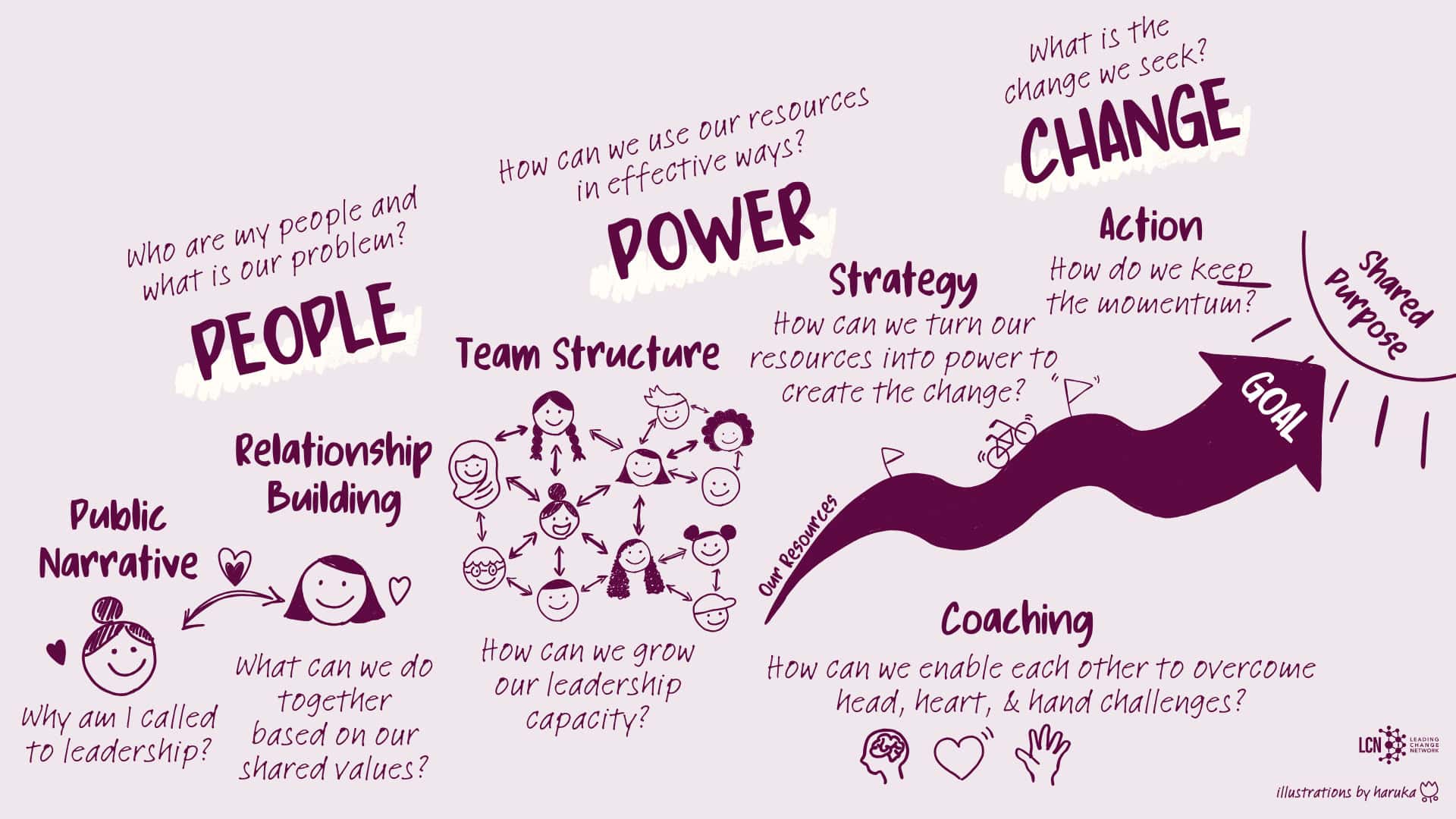
Introducing 5 key leadership practices – public narrative, relationship building, structure, strategy, and action – that comprise the craft of organizing with an emphasis on a culture of coaching as foundational for developing each of these practices.
The narrative is how we communicate our values through stories, bringing alive the motivation that is a necessary pre-condition for changing the world. Fellows will learn to tell the story of why they are called to leadership (“story of self”), the values of the community within which they are embedded that calls us as a collective to leadership (“story of us”), and the challenges to those values that demand present action (“story of now”). For the fellows who participated in the Storytelling for Change course, this will be an opportunity to practice and develop their training and coaching abilities.
Relationship building for developing power is how we turn individual narratives into the bonds needed to articulate and act on collective interests. Participants will learn to develop public relationships based on shared values, specific common interests, and the mobilization of diverse skills and resources to achieve those interests.
Structuring leadership teams and embedding those leadership teams into an interdependent campaign is how we coordinate work across time and space so that the whole can be more than the sum of the parts. Participants will learn the core conditions of effective teams and launch their leadership teams with purpose, roles, and norms.
Strategizing is how we turn the resources we have into the power we need to achieve the change that we want. Participants will learn that strategy is a verb and will begin the strategizing process for how they will achieve the campaign goals for their respective teams.
Action that is shared and measurable is how we mobilize and deploy our resources in order to develop more resources, motivation, and power as we carry out our campaign. Participants will learn the art of making clear and specific organizing ‘asks’ and how they can design actions that enhance, rather than deplete, volunteer motivation.
These 5 organizing practices are not fixed traits but rather a framework for learning and growing capacity. Coaching is a critical practice that cuts across all other practices and supports growth within them. Developing a culture of coaching is how organizers overcome the challenges that inevitably occur when working to change the world (and the necessity to change ourselves and others in the process). Participants will learn the art of coaching as a leadership practice in which they support others in overcoming challenges rather than providing solutions themselves.
Module 1 – Coaching
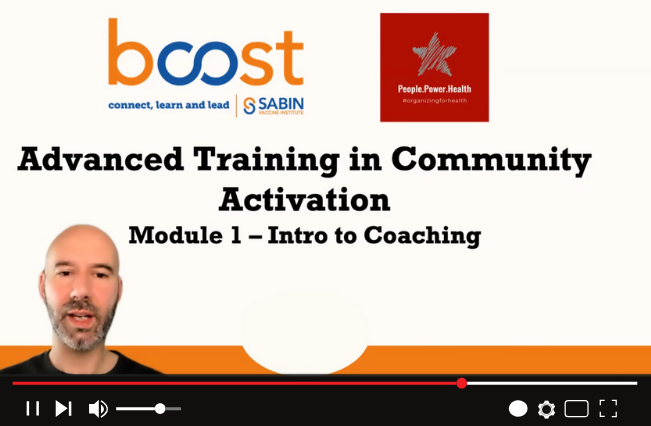
Module 1.1 – Intro to Coaching (6:02 mins)
Question – Looking back at your career, who do you remember helping you grow your leadership? What did they do?
Module 1.2 – Intro to Coaching – The Five Step Coaching Process and Three Types of Leadership Challenges
Question – How would you turn the question “Do you really think you did a great job?” into an open-ended question?
Module 1.3 – Intro to Coaching – The Power of Questioning
Question – How would you turn the question “Do you really think you did a great job?” into an open-ended question?
- Module 1 – Coaching (Slides)
Module 2 – Public Narrative
Module 2.1 – Public Narrative
Module 2.2 – What is the purpose of Story of Us?
Module 2.3
Describe 5 pictures/moments that you remember from the Maung’s story
Module 3 – Building Intentional Relationships
Module 3.1 – Building Intentional Relationships
Where does your ‘Who’ currently fall on the actor map? (multiple choice) Constituency (leadership), supporter, competition, opposition. 2. What are the shared values that you see among your constituency and supporters?
Module 3.2 – Building Intentional Relationships
On which step will you spend the most time in a 1:1 meeting? Attention, Interest, Exploration, Exchange, Commitment
Module 4 – Building Teams
Module 4.1 – Building Teams
1. What is the difference between the distributed leadership model and the dot-in-the center and ‘we are all leaders’ model?
2. If you are currently on a team, describe the type of team you are on. What type of leadership model exists?
Module. 4.2 – Building Teams
Module 4.3 – Orchestra Example
1. What is required in order for this leadership model to be successful?
2. What is different or similar with this orchestra team than other teams you’ve been on?
Module 4.4 – Orchestra Example – Nobody on the Podium: Lessons on Leadership
Module 5 – Strategizing
Module 5.1 – Strategizing
Question – In your own words describe, what are the four most important features of strategizing?
Module 5.2 – Strategizing and Power
Question – In your opinion, why understanding power is so important for developing community activation strategy?
- Module 5 – Strategy Introduction slides
- Module 5 – Slides Section B
- Module 5 – Lecture slides v3
- Module 5 – Homework template
Module 6 – Action People Power
Module 6.1 – Action People Power
Question – In your own words describe, what are the sources of power in any society or community?
Module 6.2 – Action Engagement
Question – What would have happened if your campaigns have no actions built in as part of the plan?
- Module 6 – Action Lecture
- Module 6 – Section A
- Module 6 – Section B
- Module 6 – Video Slides 1 and 2
- Module – 6 The EMD_Team_Assignment
Module 7 – Celebration
Resource Information
- Year: 2021
- Author: Pedja Stojicic, People Power Health, Sabin Vaccine Institute
- Tags: Action_Commitment, Coaching, Leadership_Leadership development, Public Narrative_Story, Relationship building, Strategy, Training
- Access : Member-only
- Regions : Global
Become a Member
- Access to exclusive resources and content
- Connect with the Leading Change Network community
- Participate in member-only events and discussions
YOU MIGHT LIKE

The Resource Center thrives on the generosity of people like you.
Share your wisdom with the community. Submit a resource today!
Share With the Community