
أدوات تفاعلية ومواد مرئية حول التنظيم المجتمعي من إعداد أهل – Visual and Explanatory Tools about Community Organising by Ahel (Arabic)
Ahel


-
Type
Videos
-
Region
SWANA
-
Practice
Coaching, Public narrative, Relationship building, Team structure, Strategy, Action
-
Language
Arabic
Introduction – مقدمة
Organizing is a form of leadership. Organizers identify, recruit, and develop the leadership of others; build community around that leadership; and build power from the resources of that community. Organizers do not provide services to clients or market products to customers. They organize a community to become a constituency – people able to “stand together” on behalf of common concerns.

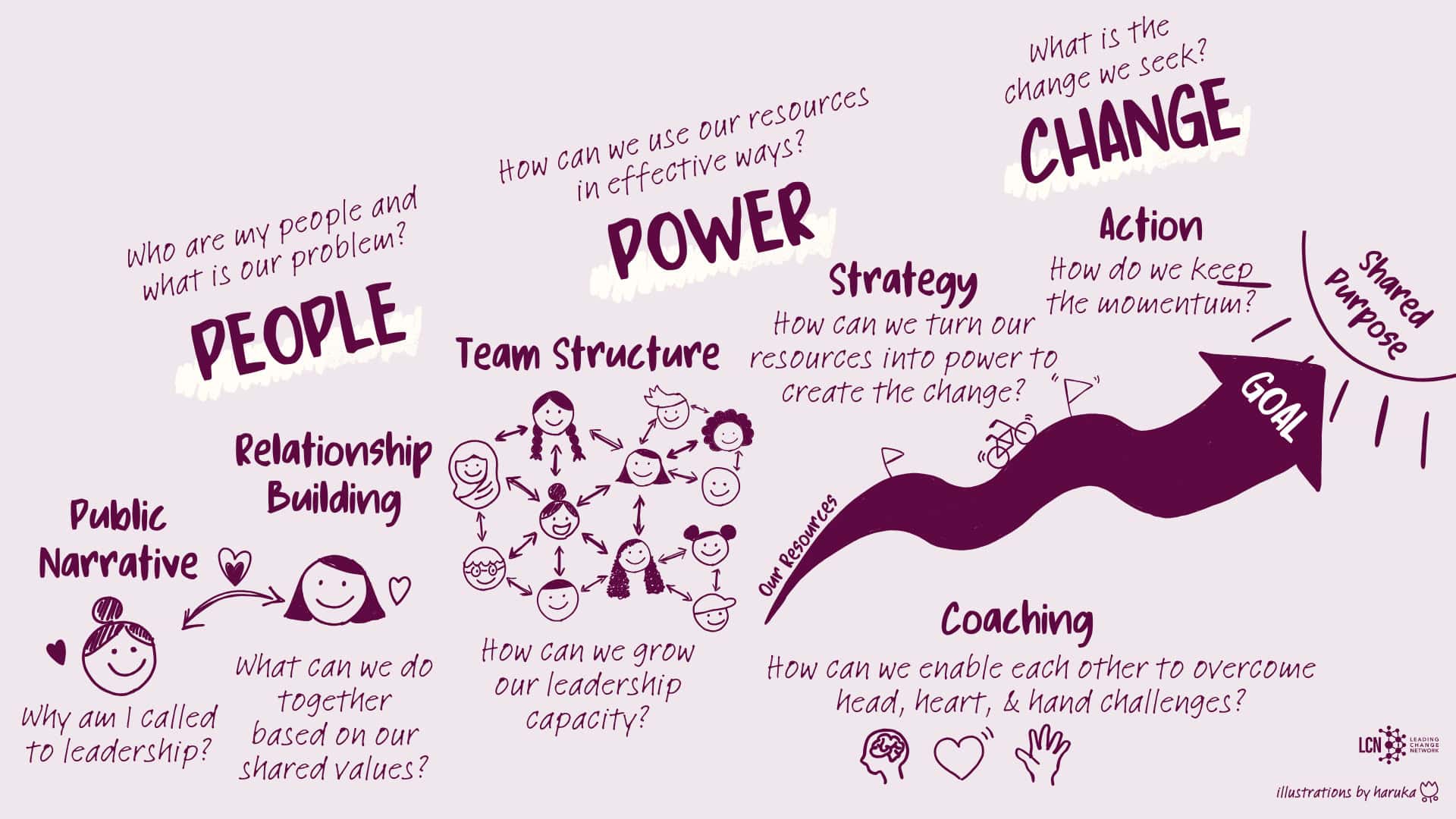
They answer the questions in dialogue with their constituency by building relationships, telling stories, devising strategy, designing structure and taking action.
Five practices of organizing
Organizers develop new relationships out of old ones – sometimes by linking one person to another and sometimes by linking whole networks of people together. One result is the formation of new networks of relationship wide and deep enough to provide a foundation for a new community in action.
Organized communities acquire agency – the capacity to act – by articulating why they must act – their story-and imagining how they can act -their strategy. Organized communities accept the responsibility to act. Empowerment of a person begins with taking responsibility. Empowerment of a community begins with commitment – the responsibility its members take for it. Responsibility begins with choosing to act. Organizers challenge people not only to act, but also to act effectively.
Organized communities learn to tell their story, a public narrative, of who they are: where they came from, where they are going, and what they must do to get there. Organizers work through narrative to deepen people’s understanding of their values, their capacity to share them, and to draw upon them for the courage to act. They learn to mobilize the feelings of urgency, anger, hope, empathy, and dignity, to challenge the feelings of inertia, apathy, fear, isolation, and self-doubt that inhibit action.
Organized communities learn to strategize how they can turn resources they have into the power they need to get what they want. Organizers engage people in understanding how they can act by deliberating on their conditions, locating the responsibility for those conditions, devising ways they could use their resources to change those conditions, a theory of change, and translating that theory into specific goals.
Organized communities build relationships, tell stories, devised strategy, and take action most effectively with the support of a structure based on coaching, teamwork, and leadership development. They operate with leadership teams, based on shared purpose, interdependent roles, and agreed upon norms, avoiding the fragility of a single person doing it all or the chaos of everyone doing everything. They create widely distributed leadership opportunities, cascading outward, like a snowflake, as opposed to narrowly held opportunities. They exercise accountability and offer support through ongoing coaching. In this way they can build communities which are bound yet inclusive, communal yet diverse, solidaristic yet tolerant. They work to develop a relationship between a constituency and its leaders based on mutual responsibility and accountability.
Organizers work through campaigns. Campaigns are highly energized, intensely focused, concentrated streams of activity with specific goals and deadlines. Through campaigns, people are recruited, programs launched, battles fought, and organizations built. One challenge is how to balance campaigns with the ongoing work of organizational growth and development. And, win or lose, each campaign must conclude with analysis, learning, and celebration.

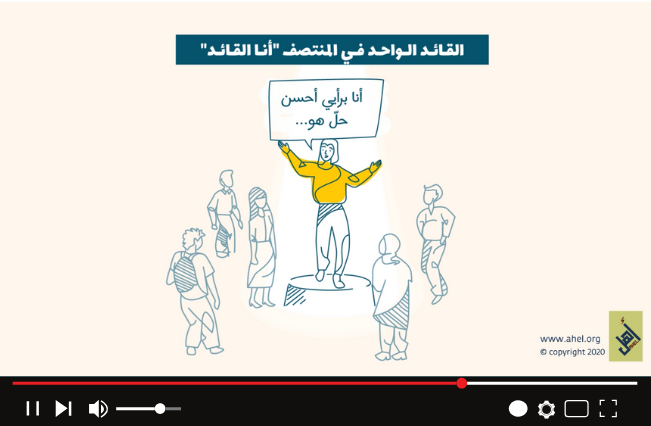
Leadership – القـــــــيادة
Leadership (Video)

Leadership (PDF)
Good Tactics – التكتيك الجيد

Community Organizing Practices – ممارسات التنظيم المجتمعي

Community Organizing Practices (PDF)
Mobilizing vs. Organizing – الحشد مقابل التنظيم

Mobilizing vs. Organizing (PDF)
Public Narrative – القصة العامة


One to Ones – لقاءات ١:١
House Meetings – اللقاءات المنزلية
Power with Power Over – القوة التعاونية والقوة الضاغطة
Snowflake – البنية الممتدة
Effective Team Building – تكوين فريق فعّال
4C’s – خطوات طلب الالتزام
What is Community Organizing? – ما هو التنظيم المجتمعي

What is Community Organizing? (PDF)
Success – تعريف النجاح
People – أهل القضية

Campaign Chart – منحنى الحملة
Campaign Chart (Video)

Campaign Chart (PDF)
About Ahel – عن مؤسسة أهل
Ahel supports community groups and organizations that lead collective action to bring about change for freedom, justice and protection of human rights. We coach and train leaders and organisations interested in leading collective action to bring about the change they need and build their people power. Our main objective is to introduce and coach leaders in community organizing, shared distributed leadership and collective action so as to run successful community organized campaigns and grassroot action for change.
Explore Further – مصادر أخرى
Resource Information
- Year: 2021
- Author: Ahel
- Tags: Ahel - Jordan (Organization_Organizing Group), Community_House meetings, Leadership_Leadership development, Organizing, Organizing - Jordan, Organizing - One on Ones, Organizing - Snowflake Model, Story of Self Us Now, Tactics, Teams_Team building, Training
- Access : Member-only
- Regions : SWANA
Become a Member
- Access to exclusive resources and content
- Connect with the Leading Change Network community
- Participate in member-only events and discussions
YOU MIGHT LIKE


The Resource Center thrives on the generosity of people like you.
Share your wisdom with the community. Submit a resource today!
Share With the Community